
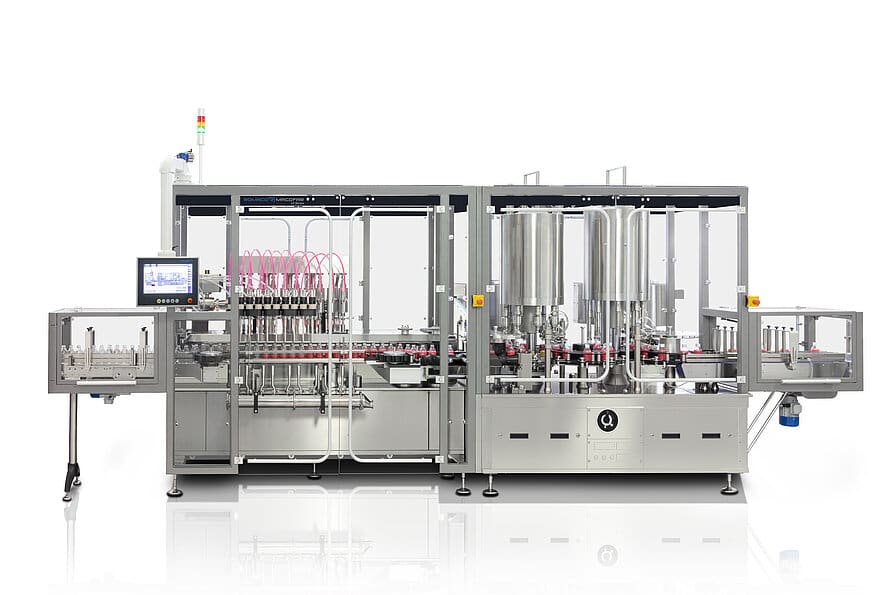
Choosing the right liquid filling machine is critical for ensuring precision, reliability, and regulatory compliance in pharmaceutical, cosmetic, and food industries. The ideal pharmaceutical liquid filling machine supports accurate dosing, consistent product quality, and streamlined operations. Whether you need an automatic liquid filling machine or high-speed pharmaceutical filling machines, selecting the right pharmaceutical filling machine can reduce waste, boost efficiency, and scale with production demands.
This guide highlights key factors to consider—from production capacity and product compatibility to automation level and compliance—helping businesses invest in the most suitable pharmaceutical production equipment for long-term success.
The Vital Role of Pharmaceutical Filling Machines in Large-Scale Production
Pharmaceutical production equipment, including liquid filling machines, is designed to support the demanding requirements of large-scale production by ensuring efficiency, consistency, and accuracy. In an industry where meeting high output demands without compromising on quality is crucial, these machines play an integral role in automating processes, reducing manual intervention, and enabling businesses to meet growing market needs. Their ability to handle high volumes with precision makes them indispensable for pharmaceutical manufacturers aiming to scale production while maintaining product integrity.
Precision is especially critical in pharmaceutical filling processes. Accurate dosing of liquids, whether for syrups, vaccines, or intravenous solutions, is essential not only to ensure the product’s efficacy but also to protect patient safety. Any deviation in the quantity of active ingredients can lead to serious consequences, making exact measurements a non-negotiable aspect of the process. Pharmaceutical liquid filling machines are designed with advanced technologies that ensure precise filling, minimizing errors and wastage, while supporting the sterility required to meet stringent industry standards.
Sterility is another key factor that these machines address. In pharmaceutical production, maintaining a contaminant-free environment is vital to prevent the risk of microbial contamination. Filling machines often operate in sterile conditions or are equipped with features like clean-in-place (CIP) systems, ensuring that both the equipment and the product remain uncontaminated throughout the process.
Moreover, these machines play a critical role in helping manufacturers comply with strict regulatory requirements. Pharmaceutical production is governed by standards such as Good Manufacturing Practices (GMP) and other international regulations that demand consistency, traceability, and quality assurance at every stage of the process. Filling machines are engineered to adhere to these requirements, offering features like data tracking, validation systems, and fail-safe mechanisms to ensure that each product meets the necessary specifications.
In essence, pharmaceutical filling machines not only facilitate large-scale production but also act as guardians of quality and compliance. Their ability to combine speed, precision, and sterility ensures that manufacturers can produce safe, high-quality medicines while adhering to the rigorous standards of the industry.
Key Factors to Consider When Choosing a Liquid Filling Machine
When choosing a liquid filling machine, several critical factors must be evaluated to ensure it meets the operational needs of a pharmaceutical business.
Production volume and speed requirements play a key role in machine selection. Businesses with high demand should prioritize high-speed pharmaceutical filling machines capable of meeting large-scale production needs without compromising accuracy or efficiency. Understanding production goals helps identify the appropriate machine capacity.
The type of product being filled also influences the choice. The filling system of the machine must be tailored to the properties of the liquid, whether viscous, non-viscous, or corrosive. For pharmaceuticals, the ability to handle sterile products is vital, with specialized designs ensuring contamination-free filling for sterile applications.
Accuracy and consistency are non-negotiable in pharmaceutical production. Precise dosing minimizes product wastage, ensures compliance with stringent quality standards, and safeguards patient safety.
Compatibility with current systems is another important consideration. A liquid filling machine should integrate seamlessly with existing equipment and production lines while offering scalability to accommodate future growth.
Adherence to regulatory compliance is crucial. Machines must meet industry standards such as GMP and FDA requirements to ensure the safety, efficacy, and quality of products. In addition, meeting regulatory standards is mandatory for commercializing products and exporting them to various countries.
Finally, the availability of maintenance and service support is essential. Choosing machines with accessible technical support and easy maintenance ensures minimal downtime, extending equipment lifespan and optimizing productivity.
Romaco’s Expertise in Pharmaceutical Filling Solutions
Romaco has established a strong reputation as a leading provider of advanced pharmaceutical production equipment, known for its efficient solutions and commitment to quality. Their pharmaceutical liquid filling machines are designed to meet the exacting standards of the industry, offering unparalleled precision, cutting-edge automation, and scalability to suit businesses of all sizes.
Romaco’s filling machines feature state-of-the-art technology that ensures accurate dosing, critical for maintaining product consistency and compliance with regulatory standards. The automation capabilities streamline production processes, minimizing human intervention while increasing efficiency and reducing the risk of contamination. Additionally, their machines are designed with scalability in mind, allowing pharmaceutical businesses to adapt to growing production demands seamlessly.
An example of Romaco’s expertise is evident in their latest ophthalmic filling machines, which are tailored to handle diverse liquid formulations with utmost precision, including sensitive, sterile solutions required for eye care products, while ensuring contamination-free filling and compliance with stringent pharmaceutical standards. These machines are specifically designed to accommodate a wide range of components, such as lightweight plastic bottles, droppers, screw caps, caps with integrated droppers, and integrated filters for preservative-free liquids, offering unparalleled versatility for ophthalmic production.
Romaco’s expertise also extends to lines for oral supplements and syrups, where their advanced filling systems excel in handling liquids of varying viscosities with precision. Equipped with Clean-in-Place (CIP) systems, these machines ensure thorough cleaning to prevent mix-ups and cross-contamination, maintaining the highest standards of product safety and quality. Additionally, Romaco offers turnkey solutions that encompass the entire production process—from depalletizers to palletizers, including state-of-the-art cartoning machines—providing a seamless, efficient, and fully integrated production line tailored to the specific needs of pharmaceutical manufacturers.
By addressing the unique challenges of pharmaceutical manufacturing, Romaco continues to set benchmarks in liquid filling technology, empowering businesses to achieve operational excellence.