
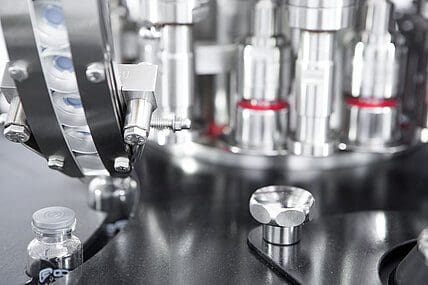
A filling machine is a specialized piece of equipment used to accurately dispense predetermined quantities of liquid or powder products into containers.
In the pharmaceutical industry, these machines are critical for ensuring product consistency, safety, and efficiency.
Key Characteristics
- Accuracy: Precise dispensing of the correct dosage is paramount to avoid medication errors.
- Sterility: To maintain product purity and prevent contamination, filling machines must adhere to strict hygienic standards.
- Efficiency: High-speed operation is essential for maximizing production output.
- Versatility: Many machines can handle different product types and container sizes. For example, Romaco Macofar Liquid filling machines can handle a variety of liquids with different viscosity once the proper filling system has been identified by Romaco experts; Romaco powder filling machines such as the MicroMaxX series can accurately dose up to two different types of powder into the same container in one single machine.
Why are filling machines such a critical component in the production of a pharmaceutical product?
- Safety: Getting the right amount of medicine is of utmost importance for each patient’s health and recovery. A filling machine must make sure that the perfect dose is filled every time.
- Consistency: Every container of medicine should have the predetermined amount of medicine. A filling machine makes sure that every dose is exactly like the last one.
We can therefore say that filling machines play a crucial role in pharmaceutical manufacturing by:
- Ensuring product quality and safety: Accurate dosing and sterile conditions are essential for patient well-being.
- Improving efficiency and productivity: Automated filling processes increase output and reduce labor costs.
- Reducing human error: Machines minimize the risk of mistakes during the filling process.
- Compliance with regulations: Pharmaceutical companies must adhere to strict quality and regulatory standards, which filling machines help to meet.
Filling machines need regular and well-established care to keep working safely and smoothly, for example regular check-ups and cleaning.
Preventive maintenance is a proactive approach to equipment care that aims to identify and rectify potential issues before they escalate into costly breakdowns.
For pharmaceutical filling machines, it’s an indispensable strategy to ensure product quality, safety, and operational efficiency.
This is important because it results in:
1. Product Quality and Safety:
Accurate dosing: Consistent and precise filling ensures patient safety by preventing under or overdosing.
Contamination prevention: Regular cleaning and maintenance reduce the risk of product contamination, safeguarding public health.
Sterility maintenance: For pharmaceutical products, sterility is paramount. A well-maintained filling line helps preserve this critical aspect.
2. Operational Efficiency and Productivity:
Reduced downtime: Preventive maintenance minimizes unexpected breakdowns, ensuring uninterrupted production.
Optimized performance: Regular servicing keeps machines operating at peak efficiency, increasing output.
Cost savings: Prolonged equipment life and reduced repair costs contribute to overall cost-effectiveness.
3. Regulatory Compliance:
Documentation: A maintenance plan provides evidence of adherence to Good Manufacturing Practices (GMP) and other regulatory requirements.
Risk mitigation: Identifying and addressing potential issues proactively helps prevent regulatory violations.
Auditing: A well-documented maintenance program facilitates smooth audits by regulatory authorities.
4. Prolonged Equipment Lifespan:
Early detection of wear and tear: Regular inspections can identify components that are showing signs of wear, allowing for timely replacement.
Reduced downtime: By addressing issues before they become critical, preventive maintenance minimizes unexpected breakdowns.
Optimized performance: Well-maintained machines operate more efficiently, leading to increased productivity.
5. Data-Driven Decision Making:
Performance tracking: Maintenance records help analyze equipment performance and identify areas for improvement.
Spare parts management: Maintenance data aids in optimal spare parts inventory management.
6. Employee Safety:
Hazard identification: Regular inspections can identify potential safety hazards, reducing the risk of accidents.
Operator training: Maintenance activities provide opportunities for operator training on equipment care and safety procedures.
In conclusion, a robust maintenance plan for pharmaceutical filling lines is not merely an operational necessity but a cornerstone of product quality, safety, and regulatory compliance. It contributes significantly to the overall success and reputation of a pharmaceutical manufacturing facility.
Conclusion
Proper maintenance of filling machines is paramount to ensuring product quality, safety, and efficiency within the pharmaceutical industry. By adhering to a comprehensive maintenance plan, including regular cleaning, lubrication, and inspection, organizations can significantly reduce downtime, minimize the risk of contamination, and extend the equipment’s lifespan.
A collaborative effort between equipment operators and maintenance personnel is essential for the successful implementation of a maintenance program. Consistent adherence to established procedures will contribute to the overall success of the pharmaceutical manufacturing process.
Optimal filling machine performance is contingent upon rigorous maintenance practices. By implementing a comprehensive maintenance plan, that encompasses regular cleaning, lubrication, and inspection, pharmaceutical manufacturers can significantly enhance product quality, safety, and operational efficiency.
Romaco offers a wealth of expertise in filling machine maintenance. Our specialized services are designed to optimize equipment performance and extend its lifespan.
Involving the machine manufacturer in a service and maintenance contract for pharmaceutical filling machines is crucial for several reasons:
1. Deep Product Knowledge:
In-depth understanding: Manufacturers possess an unparalleled knowledge of the machine’s design, components, and functionalities.
Problem-solving expertise: They can quickly diagnose and resolve complex issues due to their intimate familiarity with the equipment.
Optimized performance: Their expertise ensures the machine operates at peak efficiency, maximizing output and minimizing downtime.
2. Access to Original Parts:
Genuine components: Manufacturers can supply authentic replacement parts, guaranteeing compatibility and reliability.
Reduced downtime: Quick access to original parts minimizes equipment idle time.
Maintained equipment integrity: Using genuine parts helps preserve the machine’s original performance and lifespan.
3. Compliance and Validation Support:
Regulatory expertise: Manufacturers are well-versed in industry regulations and standards.
Validation assistance: They can provide support for equipment qualification and validation processes.
Risk mitigation: By adhering to manufacturer guidelines, the risk of compliance issues is reduced.
4. Preventative Maintenance Expertise:
Customized plans: Manufacturers can develop tailored preventive maintenance schedules based on machine usage and operating conditions.
Early issue detection: Their expertise helps identify potential problems before they escalate into major breakdowns.
Extended equipment lifespan: Proactive maintenance increases the machine’s longevity and overall performance.
5. Training and Support:
Operator training: Manufacturers can provide comprehensive training to operators, ensuring safe and efficient operation.
Technical support: Ongoing support is available to address questions and troubleshoot issues.
Knowledge transfer: Manufacturers can share best practices and maintenance tips.
By partnering with the machine manufacturer for service and maintenance, pharmaceutical companies can significantly enhance the reliability, efficiency, and lifespan of their filling machines while ensuring compliance with stringent industry regulations.